
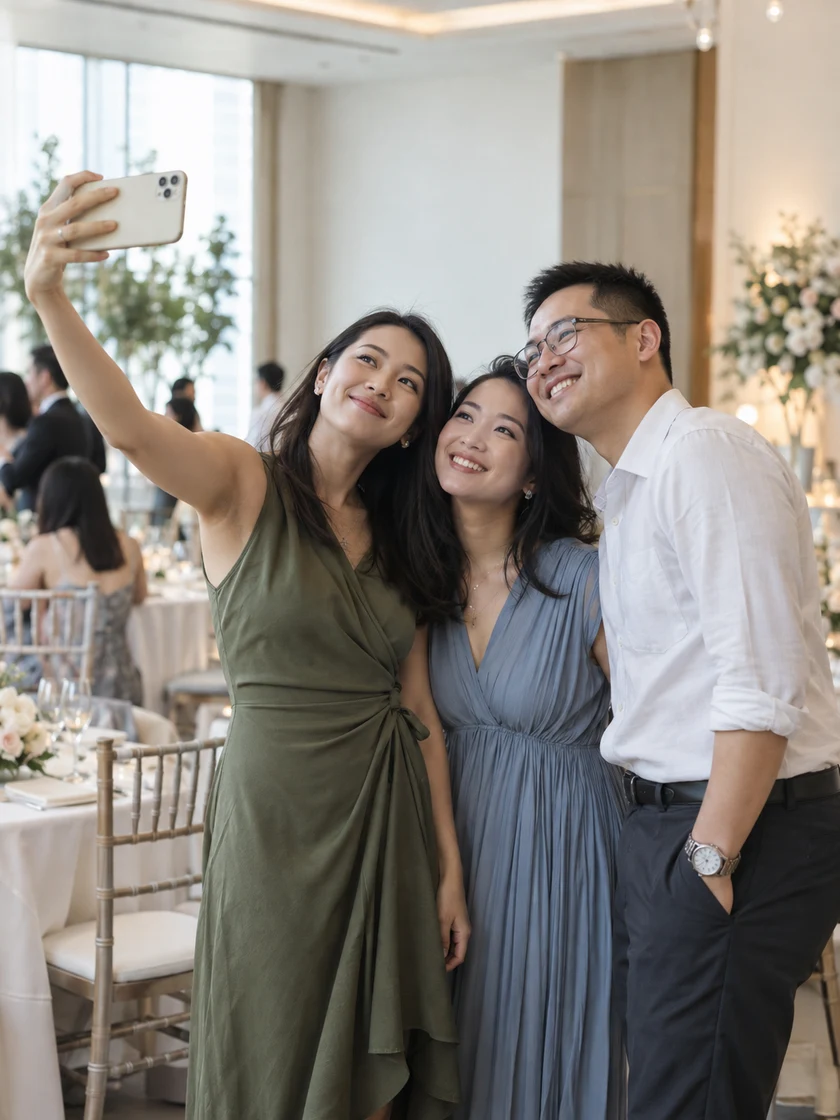
Which guest photos are you hoping to get?
Some photographs benefit from a little planning, such as a portrait of your grandparents together. Others are the pictures friends choose to take from their side of the room.
- Particular relatives and friendship groups: make time for group photos.
- Reactions while you are elsewhere: brief your photographer on guest coverage.
- Pictures friends take among themselves: choose a photo-collection link.
- Photos with messages or take-home prints: consider roving photos or a guestbook.
Your existing photography package and a simple sharing arrangement may already cover what matters.
What should you ask your wedding photographer?
Tell your photographer about the people behind the names: grandparents who rarely get everyone together, friends travelling from overseas, or cousins meeting again after years. That context gives “more guest photos” a much clearer meaning.
A complete wedding gallery can help you discuss the balance of couple and guest pictures. Bring your programme too.
- Who photographs arrivals while we are having portraits taken?
- Can we plan pictures of the family and friendship groups on our list?
- How will guest reactions fit alongside the ceremony and speeches?
- Does the booked time include the part of the reception when everyone is mingling?
- Would more time with the main photographer help, or do two things need photographing at once?
A second photographer can cover guests while the main photographer is elsewhere; extra hours let the team stay longer. Ask which would give you the pictures you feel are missing.
Ask for the extra cost of each proposal and what it adds: arrival coverage, a second photographer during portraits, or a later finish. Confirm who does that work and whether the resulting images are included in your delivered gallery.
How do you include guests you might otherwise miss?
A few planned portraits help include people who might otherwise stay out of the camera's way. Leave room for candid pictures too, without relying on them to include everyone.
A friend who knows the group can help gather everyone. Mention anyone who needs a seat or is leaving early, so their pictures feel comfortable and unhurried.
At a banquet, agree when table photographs fit around food service and speeches. At a church reception, plan family groups before people leave or move to another venue.
Your brief can be as simple as:
How do you collect photos from guests' phones?
Give everyone one easy place to send their favourites. A shared album or upload link can bring pictures together; direct messages may be enough if you are only asking a few friends.
A QR code can make the link easy to find. Add a short web address underneath for guests who cannot scan it, and test both on a friend's phone before printing your signs.
Google Photos supports album sharing through links and QR codes, but people with a shared link can view the album. Check the sharing controls before distributing it.
During that trial, check four things:
- Can your friend send a photo, and do they need an account?
- Can they see everyone else's pictures, or only their own?
- Can you download the photo at a quality you are happy to keep?
- How long can guests add pictures, and when does your access end?
If guests can also take new photos for a guestbook, distinguish the two invitations: “Take a photo for our guestbook” and “Share photos from your phone”. Guests can then choose what they would like to do.
When would roving photography or a booth help?
A roving photographer can approach guests at their tables and photograph groups around the reception. Ask to see examples from similar lighting, then confirm the hours, guest groups to prioritise and digital delivery.
Some roving services offer prints: The Photo Booth advertises live-print options. Ask whether printing, an assistant and guest copies are included in your quote, and where guests collect them.
A conventional booth gives friends a place to pose together and collect prints. Monotone for weddings lets them take photos for the guestbook on their own phones, add an optional note or drawing, and collect a custom black-and-white photo receipt.
With Monotone, you also receive a digital guestbook of the photos and messages. The receipt and guestbook designs can use lettering and artwork from your wedding. An operator runs printing and helps guests collect their receipts.
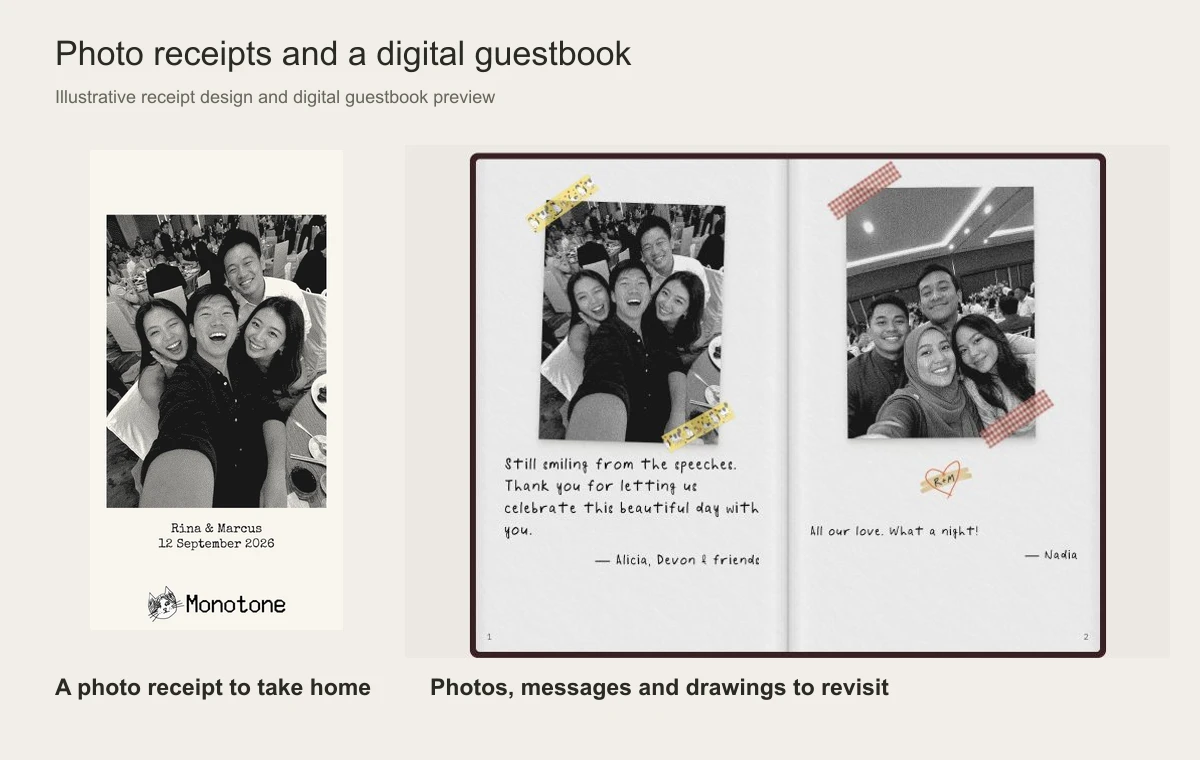
Monotone takes new photos in the phone browser. To collect pictures guests have already taken, use your separate collection link. A conventional booth is another option if you want posed portraits with controlled lighting or colour prints.
Guests choose whether to join, so neither a booth nor a guestbook replaces the photographer's brief for particular people. The booth, roving and Instax comparison helps you compare formats; the photo guestbook setup guide covers arranging the book itself.
What should you do when the photos arrive?
Set aside some time to look through them together. Save your photos and guestbook files before access ends, and keep a backup. Separate folders for the professional gallery and guest pictures will help you find them later.
Share selected photographs with the people in them, and check that they are comfortable before posting publicly.
Planning an event?
Get in touch for availability and pricing.
Contact usSee Monotone for weddings