
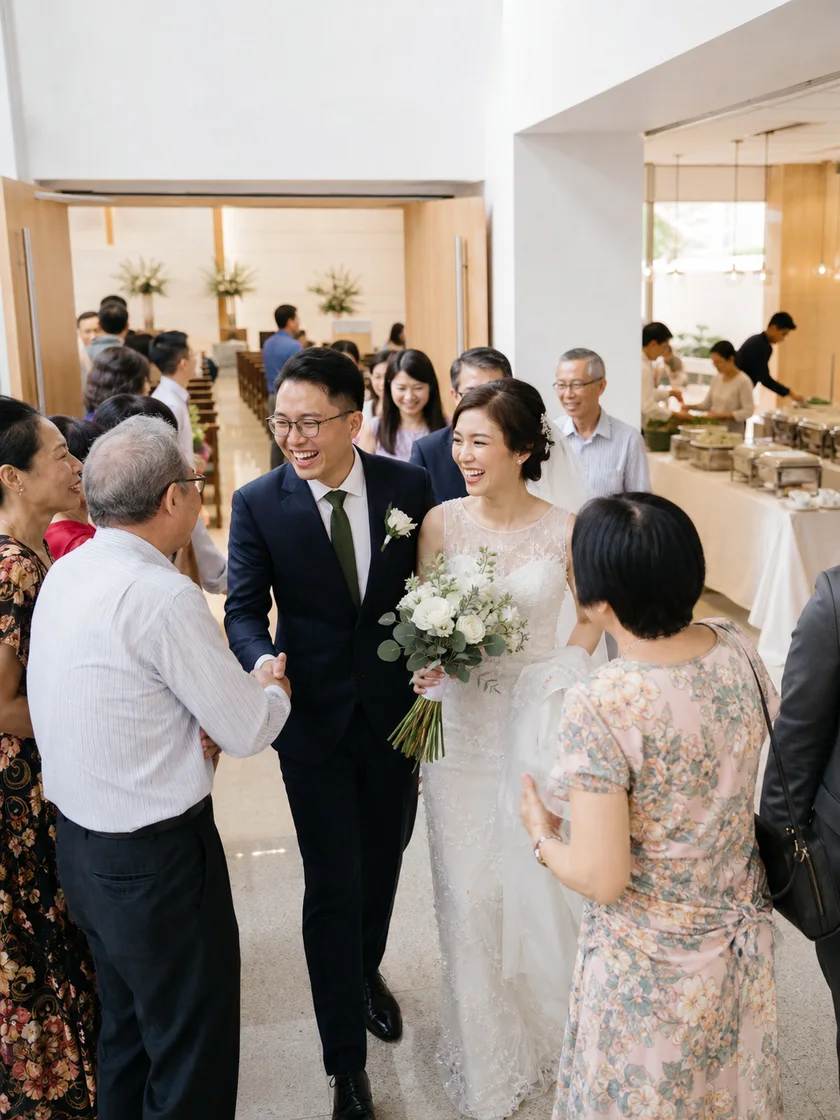
Start with the church and its requirements
- Confirm the church, officiant and marriage preparation.
- Arrange the legal marriage and reception space.
- Book suppliers against the approved plan.
- Give one coordinator the schedule, contacts and clearing deadline.
If you attend the church, speak to its pastor, priest or office. If you hope to marry elsewhere, first ask whether it accepts external couples. Confirm eligibility and the date before paying supplier deposits.
Church of St Ignatius, The People's Bible Church and Church of the Holy Family publish their own preparation and booking instructions. Ask your chosen church for its requirements in writing; another church's timetable may not apply.
- Eligibility and officiant
- Confirm membership, baptism or interfaith requirements and who may conduct the service.
- Date and preparation
- Agree the ceremony date, marriage preparation, interviews, documents and rehearsal.
- Rooms and facilities
- Check which sanctuary, reception hall, furniture and sound equipment the booking includes.
- Supplier permissions
- Ask what caterers, photographers, florists and musicians may bring and do.
Arrange the legal marriage
Confirm whether a licensed solemniser will conduct the legal marriage during the church service or separately. Follow Our Marriage Journey for your civil application, alongside the church's preparation requirements.
The official outside-ROM checklist requires the couple, two witnesses and solemniser to be present, with identification for the couple and witnesses. Confirm the current documents and ceremony arrangements with your solemniser.
Put the legal ceremony and church service on the same planning calendar, even when they happen on different dates. Name the person who will bring the required documents and help the witnesses arrive in time.
Agree the reception room and access
For an on-site lunch, confirm the hall or fellowship space before inviting guests. Set the lunch count from the approved reception capacity. If fewer people can attend lunch than the service, make that clear on the invitation.
- Capacity and furniture: how many guests may use the room, with which tables and chairs?
- Food: where may the caterer prepare, heat and serve food, then wash up and discard waste?
- Access: when can suppliers load in, and which entrance, lift and vehicle stopping area should they use?
- Utilities: which power points, water supply and kitchen facilities are available?
- Guest movement: where will congratulations, photographs, the buffet line and accessible routes go?
- Clearing: who removes leftovers, rubbish, decor and equipment, and when must the rooms be handed back?
Book food, photography and the extras you want
With the rooms and permissions agreed, choose suppliers for the parts of the day you want help with. A church reception can be simple; you do not need a supplier in every category.
For lunch or refreshments, compare caterers against the church's rules. Weddings by Grain is one wedding-catering example. Ask for food, delivery, equipment, service staff, cleanup and teardown in the quote, rather than comparing menus alone.
For photography, show the photographer the ceremony, signing and family-photo plan. Ask about any movement restrictions during the service, coverage hours and delivery. Name someone who can gather relatives for photographs without leaving the couple to find everyone.
For flowers and signs, decide which arrangements need to move from the ceremony to lunch. Confirm permitted fixings, setup access and who carries the pieces between rooms. Reusing an arrangement only helps if that move fits the schedule.
For an optional guest activity, start with something you would enjoy: written messages, photos with friends or a live illustrator. Wedding entertainment without games explains these choices. Confirm church permission for the complete setup before booking.
Give one coordinator the whole day
A coordinator can handle supplier arrivals, church handovers, family photographs and lunch opening. If you do not hire one, ask a willing person who will be available during these moments. Avoid relying on someone needed in every family photograph.
| Stage | Coordinator's job |
|---|---|
| Before arrival | Meet suppliers; check rooms, sound, signs and catering. |
| During the service | Coordinate reception vendors so food and refreshments are ready before guests arrive. |
| After the service | Gather photo groups and guide guests towards lunch. |
| Lunch opens | Confirm food is ready and give the couple time to eat. |
| Final clearing | Collect guestbook materials; clear equipment and hand rooms back. |
Give that person the church contact, supplier numbers, family-photo list and final room deadline. The caterer and other suppliers should each know who clears their own equipment; the coordinator checks that the agreed handovers happen.
Photos and a guestbook during lunch
Monotone for weddings lets guests take photos on their own phones around the reception. They can add a note or drawing, collect black-and-white photo receipts and leave their photos and messages together in your digital guestbook.
Open it during the agreed reception period after the service. An on-site operator handles printing and collection. Confirm copies and the closing time in your booking so printing and packing fit the church's room deadline.
A conventional booth suits posed portraits with controlled lighting and colour prints. If you mainly want handwritten wishes, a written guestbook may be enough.
Check the final church brief
Before sharing the final plan, have the church and your coordinator check it together. Resolve any difference between the room booking, supplier times and guest invitation now.
- Church: ceremony, preparation and reception arrangements confirmed.
- Marriage: solemniser, witnesses and required documents organised.
- Guests: lunch capacity, dietary needs, seating and access accounted for.
- Suppliers: approved setup, arrivals, clearing duties and contacts shared.
- Coordinator: family photographs, lunch opening and final handback covered.
More questions couples ask
How early should we contact the church?
Contact the church before paying other deposits. Its office can explain availability, eligibility and the time needed for preparation. There is no single lead time that applies to every church.
What if guests must walk outside to reach lunch?
Ask the church where guests can wait if it rains and how people with limited mobility will move between rooms. Put the agreed route and the person directing guests in the coordinator's brief.
Planning an event?
Get in touch for availability and pricing.
Contact usSee Monotone for weddings