
1. Carnival games for different ages
Ring toss, beanbag targets and mini bowling give families a short game they can try together. They work as drop-in stations, so nobody has to arrive at one exact time or commit to a long competition.
The same game can serve different ages if the operator adjusts it. A nearer throwing line lets a younger child have a turn; adults and older children can use a harder target. Choose games by how they play, not just how the stalls look.
If you're hiring equipment, find out whether a person runs each stall or your own team needs to explain, reset and supervise it. Small participation prizes keep the focus on trying the games rather than winning.
2. Inflatables for younger children
A bouncy castle or inflatable obstacle course gives young children somewhere to spend their energy while parents talk nearby. It also keeps them occupied between other stations.
Inflatables need a clear, level area, power for the blower and a supervisor at the entrance. Ask about age limits, how many children can use it at once and whether it can run indoors. Funfair's family day guide covers inflatables alongside carnival options.
3. A craft table where families make something together
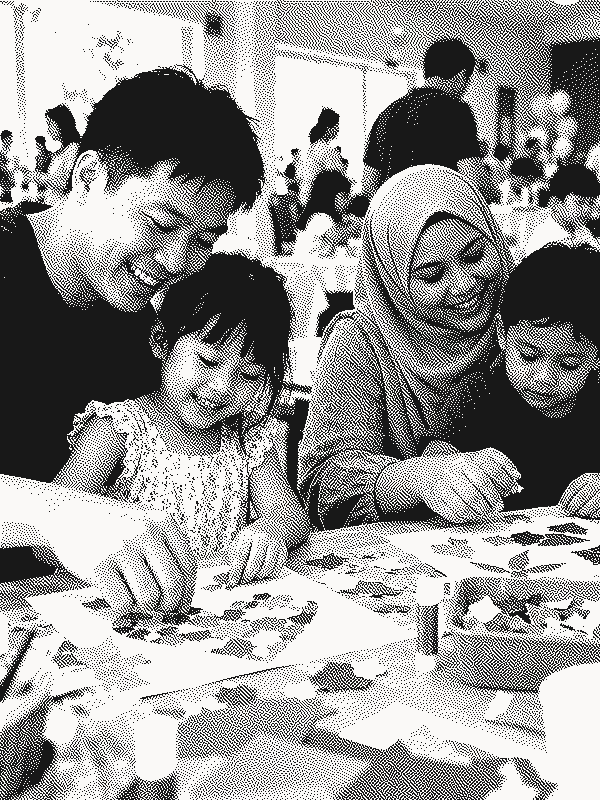
A decorated photo frame, a paper animal or a small collage gives adults and children a shared project. A frame is especially useful if you're also arranging family photos: people can make it first and add a print later.
For a drop-in table, choose a craft with a clear example and a few steps. Pre-cut pieces make it easier for younger children to join, while older children can add their own design.
Paint that needs drying, loose glitter and unfinished projects all need more handling than a card or paper craft. See a completed example before ordering materials for the whole event.
4. Face painting and balloon sculpting
Children choose a design and wear or carry it for the rest of the day. Both work beside other activities, because families can come back for their turn if the artist keeps a simple list.
A short menu of designs makes the choice quicker. Ask how many children each artist can serve in your time window, and whether a hand design is available for children who don't want their face painted. Funworks lists both among its family day activities.
5. Family photos with prints to take home
A family photo gives employees a keepsake with the people they brought along. It also suits colleagues attending with a partner or an older relative, so not every activity is about entertaining young children.
With Monotone for corporate events, guests scan a QR code and take photos on their own phones, then collect a custom black-and-white photo receipt from a staffed print station. The family day name and company artwork can appear in the receipt design.
An adult can handle the phone for a family photo. If you want posed, lit family portraits, book a photographer or a conventional booth instead; Monotone suits casual photos taken around the gathering.
6. A family magic show
A short magic show gives families something to watch together. It can provide a shared point in a day otherwise made up of separate stations, particularly before a closing thank-you.
Tell the performer the expected age mix, because a show for preschoolers differs from one for older children and adults. Keep volunteering optional, and seat the audience where children can see without blocking a walkway.
7. Live snack stations
Popcorn, candy floss or an ice cream cart gives families a treat to collect between activities. Watching it being made is part of the appeal for children, and it gives adults a natural place to pause and chat.
Check the station with your caterer and venue: power, preparation space, dietary needs and how many servings are included. Carnival World's live-food range includes snacks and drinks.
8. A family building challenge
Give each family the same set of large construction pieces and a simple task: build a bridge that holds a toy, or a tower that stands on its own. Families can try, adjust their design and compare results.
Give everyone a role, such as choosing pieces, building and testing, so adults don't take over. A rolling challenge suits a station people visit when free; a hosted competition needs a fixed start time and a judge.
9. A short discovery trail
A trail gives families a reason to explore the event space together. Each stop can involve finding a picture, matching an object or solving a clue, at their own pace.
Picture clues help younger children take part. Keep the route compact, inside the agreed event space and away from work or service areas, and have one person walk it beforehand with the actual clues.
10. A guided farm visit
A visit can be the whole family day if you prefer a hosted outing to assembling several stalls. A guided tour gives families things to discover together, and a hands-on workshop afterwards gives them time to sit and make something.
City Sprouts' corporate family days combine guided farm tours with hands-on activities. Compare walking time, rest areas and what happens if outdoor parts cannot run before choosing an outing over an on-site programme.
Choosing a mix for your families
For an office or function-room gathering, pick one game, a craft table and one keepsake so people have different ways to join. For a larger venue, add inflatables or a snack station for younger children and one advertised show to bring everyone together.
Avoid booking several activities that all need long individual turns at the same time. Check where families will sit, eat and shelter from rain or sun, even though that isn't part of the entertainment budget.
For family photo receipts, contact Monotone with your date, venue, expected attendance and the age mix. Packages start from S$250 for the first 2 hours.
Planning an event?
Get in touch for availability and pricing.
Contact usSee Monotone for corporate events